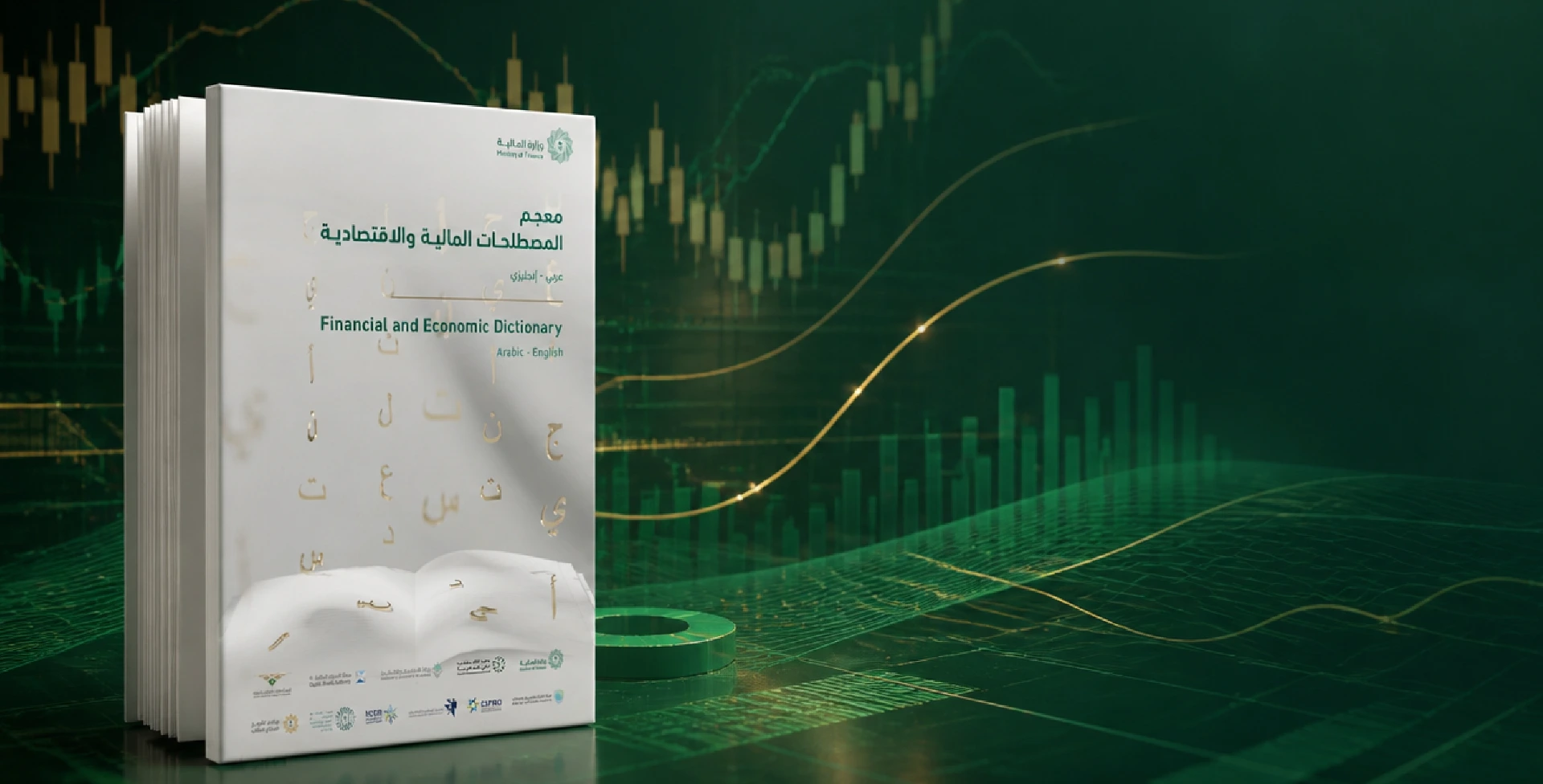
Your gateway to comprehensive financial knowledge with more than 2000 financial and economic terms
Most searched terms
Dual Unit Price
A settlement of the unit price calculated, in accordance with the financial statements, to which the expected credit losses are registered in the financial statements of the fund, against the unit price calculated for dealing purposes.
Durable Goods
Long-lasting consumer goods such as cars, appliances, and furniture that are used over time.
Variable-Rate Bond
A debt instrument where the interest rate is periodically adjusted based on a benchmark or index.
Savings Bond
Bonds typically issued by governmental or banking entities, designed for long-term investment with a fixed interest.
Accounting Record
All documents, books, and accounting entries that contribute to preparing the financial statements including: records of assets, liabilities, and supporting documents, such as: checks, payment receipts, receipts, invoices... etc.
Prime Interest Rate
The interest rate that banks charge their most creditworthy customers.
Standard Price
The price according to the standard price list as established by the Tax Authorities of GCC countries. The standard price is also known as the minimum price or minimum value.
Macroprudential
Financial regulations and policies designed to address systemic risks in the financial system as a whole.
Data Brokers
Companies that collect, analyze, and sell consumer and business data for marketing and financial purposes.
Corporate Bond
A debt security issued by a corporation to raise capital. Its credit rating reflects the company's ability to make interest payments and repay the principal on the bond.
Tax-Exempt Bond
A bond where interest income is not subject to taxation, often issued by governments.
Long-Run Treasury bond (T-bond)
Debt securities typically issued by government entities, central banks, banks, or other institutions, maturing after more than 10 years.
Green Bonds
A type of bond used to finance environmentally friendly projects. The issuer commits to using the bond proceeds for projects with positive environmental impacts.
Investment-Grade Bonds
Bonds rated relatively high by credit rating agencies, suggesting a high likelihood that the issuer will meet its financial obligations (interest and principal), and carrying relatively lower risk compared to lower-rated bonds.
Primary Market
The market where newly issued securities, such as stocks and bonds, are bought and sold for the first time, typically through initial public offerings (IPOs) or bond issuances.
Usability
Usability refers to the ease with which users can effectively and efficiently interact with a product, system, or service to achieve their intended goals. It is a fundamental aspect of user experience (UX) design, emphasizing how user-friendly and accessible a design is.
Duty-Free Market
The licensed building or place wherein goods are placed free of customs duties for purposes of display or sale.
Parallel Market
The market of Exchange where shares, that have been registered and offered pursuant to Part 8 of the Rules on the Offer of Securities and Continuing Obligations, are traded.
Capital Market
A financial market for buying and selling long-term securities like stocks and bonds.
Contractionary Fiscal Policy
A policy aimed at reducing government spending or increasing taxes to slow down the economy and reduce inflation.
Workflow
A defined sequence of tasks, processes, or steps that need to be completed in a specific order to achieve a particular goal or outcome.
Purchase of Tax Stamps
Obtain tax stamps by requesting them according to the Zakat, Tax and Customs Authority's form, provided that specific criteria are met, before the excise goods are released for consumption.
Distribution Channel Partnerships
When the vendor uses a partner to resell, manage, and/or deliver the product to end customers.
Capital Company
By this definition, capital companies include joint-stock companies, limited liability companies, and limited liability company with shares. Investment funds are considered capital companies for the purposes of income tax law.
Source Code
The fundamental component of a computer program created by a programmer.
Secondary Market
A financial market where existing securities, such as stocks, bonds, or derivatives, are bought and sold among investors, rather than directly from the issuer.
Commodities Market
A marketplace where raw materials like oil, gold, and agricultural products are traded.
Global Markets
International financial and trade systems where goods, services, and investments are exchanged.
Production Factors Market
A market where productive resources (land, labor, capital, and entrepreneurship) are bought and sold. Businesses purchase labor from workers, capital from investors, etc.
Emerging Market
Economies in transition from developing to developed status, characterized by rapid growth, increasing industrialization, and market liberalization.
Multi-Entity Sovereignties
Relationships, transactions, or agreements that involve multiple sovereign states, often in the context of international trade, diplomacy, or financial cooperation.
Expansionary Monetary Policy
A policy aimed at increasing the money supply and reducing interest rates to stimulate economic growth.
Real Estate Companies
Companies whose properties represent more than 50% of their assets, or their capital.
Insurance Company
Any company offering insurance services in exchange for premiums, under the supervision by SAMA.
Terms of Business
A written statement, provided to a client, of the terms on which a capital market institution will conduct securities business with or for the client.
Fund’s Terms and Conditions
The contracts containing those disclosures and provisions required under the Investment Funds Regulations and the Real Estate Investment Funds Regulations, signed between the fund manager and the unitholder.
Agency Partner
Typically agencies who either send you leads or close business on your behalf.
Registration Certificate
A certificate obtained by the establishment in the event that the registration requirements in the (Zakat, Tax and Customs Authority) ZATCA system are fulfilled; it must be obtained within the first fiscal year in the first 12 months of practicing the activity.
Merchandise Exports
They are tangible goods that are produced in a country and sold to other countries. These goods include agricultural, industrial, and mineral products, such as crude oil, natural gas, petrochemicals, food products, clothing, automobiles, and electronic devices.
National Exports
In accordance with international trade regulations, this refers to all goods intended for export outside the Kingdom, which have been either.
Non-Oil Exports
Goods and services that do not contain oil or its derivatives, including agricultural products like fruits and grains, industrial products like cars, electronics, minerals like gold and copper, as well as services like tourism and education.
Net Liquid Assets
Assets funded by equity (common stock, disclosed reserves or other retained earnings) which are not otherwise pledged and freely available to cover General Business Risk.
Net of Wealth
The total assets minus total liabilities of an individual or organization.
Health of Economy
A measure of economic stability based on factors like GDP, inflation, and employment.
Conflict
Disputes, disagreements, or opposing interests between individuals, departments, or organizations, which can impact decision-making and operations.
Margin Transaction
A transaction where a Capital Market Institution makes a loan to a client of a portion of the cost of the transaction.
Monetary Market Fund
An investment fund the sole objective of which is to invest in short-term securities and money market transactions in accordance with the Investment Funds Regulations.
Private Fund
An investment fund which is established in the Kingdom and which is not a public fund, and the units in which may be offered by the fund manager, in accordance with Part Five of the Investment Funds Regulations, to investors in the Kingdom.
Public Fund
An investment fund which is established in the Kingdom and the units in which may be offered by the fund manager, in accordance with Part Four of the Investment Funds Regulations, to investors in the Kingdom otherwise than by way of a private placement.
Specialized Public Fund
A mutual fund with a specific investment objective, offered to the public.
Zakat Certificate
A certificate issued to the Zakat payer upon his request; to be used in proceeding with other governmental procedures. It is issued only when there are no cases of submission of declarations, late payments, or any current obligations.
Instant Certificate
A certificate issued immediately after submitting declarations related to Zakat for a specific financial period and paying its related payments.
Business Owner
The person responsible for business requirements related to a system or asset.
Oil Exports
Goods that include crude oil and its derived products such as natural gas, refined petroleum products (like gasoline, diesel), and petrochemical products that rely on oil extraction as the main source.
Fund's Net Assets Value
For the purposes of the Investment Funds Regulations and the Real Estate Investment Funds Regulations, means; the Fund’s Total Assets Value minus its liabilities.
Net Assets Value
For the purposes of the Investment Funds Regulations and the Real Estate Investment Funds Regulations, means; the Fund’s Net Assets Value divided by the number of units outstanding.
External Shock
An unexpected event from outside a country that disrupts its economy, such as natural disasters, pandemics, geopolitical conflicts, or financial crises.
Visitors
Searches