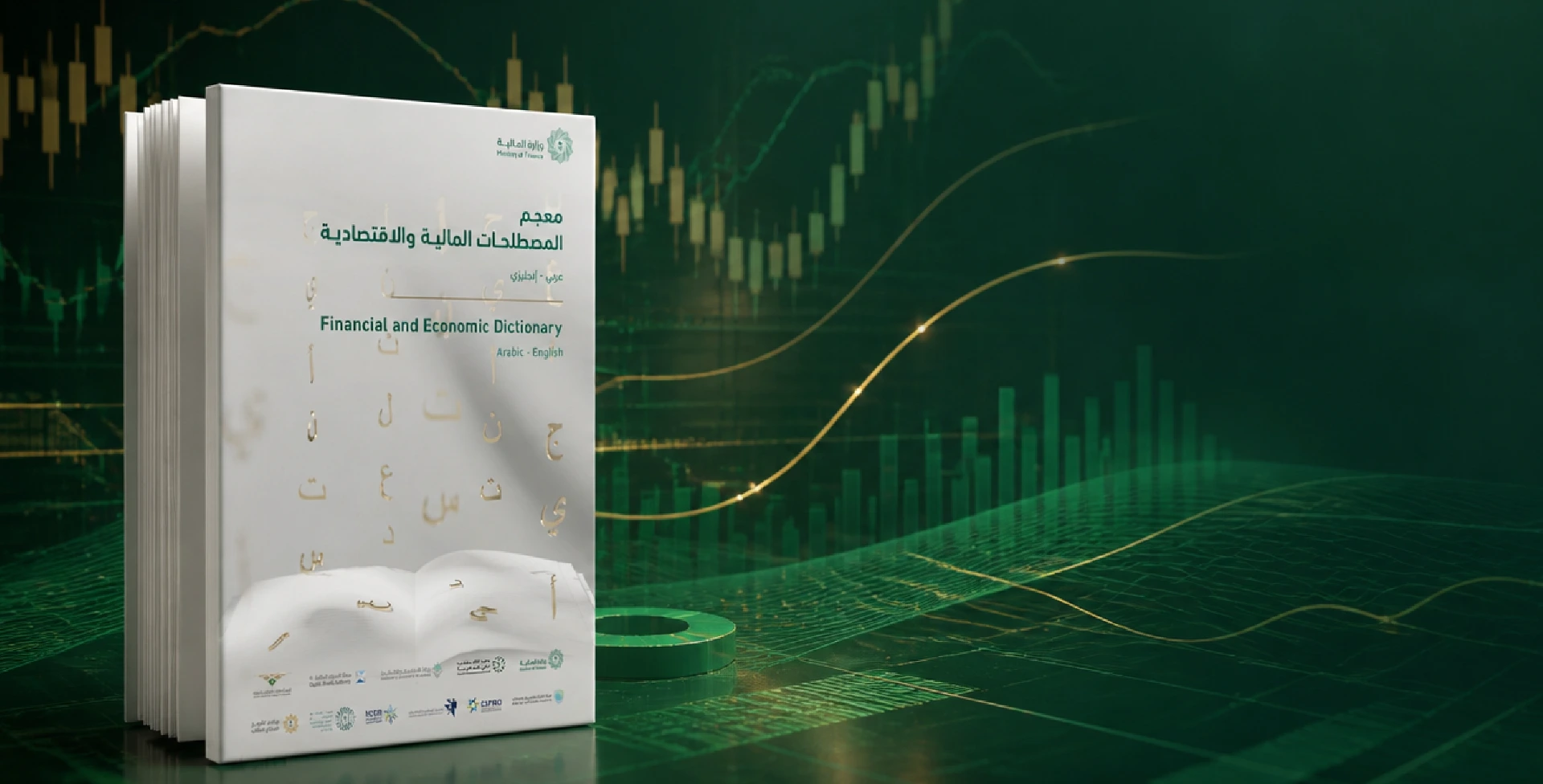
Your gateway to comprehensive financial knowledge with more than 2000 financial and economic terms
Most searched terms
Peer-to-Peer Lending
A decentralized financial system where individuals lend and borrow directly from each other.
Payment Mechanism
Contractual arrangements through which the Private Party is compensated in a Public-Private Partnership (PPP) project. This mechanism outlines the timing, amount, and conditions under which payments will be made.
Compliance
To meet all commitment requirements, either mandatory requirements such as: legislation, regulations or optional requirements such as: internal policies of the entity and standards of the sector.
Production of Excise Goods
Any activity in Saudi Arabia involving the manufacture, cultivation, or changing of components of excise goods to the extent that makes it subject to tax.
Liability
Financial obligations and debts owed by an individual, institution, or entity that usually require repayment or fulfillment.
Decline
A reduction in value, performance, or economic activity. It may indicate a negative trend or change.
Asset-Backed Security (ABS)
A financial instrument backed by a pool of assets, such as loans or receivables, which generate cash flow.
Direct Revenues
Revenues accrued to the entity from its primary activity, as authorized under its governing regulations and executive bylaws.
Aggregate Expenditure
The total spending on an economy’s goods and services within a specific period, including consumption, investment, government spending, and net exports.
Aggregate Revenues
It is the total amount collected from oil and non-oil revenues, including returns from rents, taxes, fees, investment, and returns on assets.
Primary Seller
A financial institution authorized to participate in government bond auctions and conduct market operations on behalf of a central bank or government.
Business Environment
External and internal factors affecting a company's operations, such as regulations, competition, and economy.
Central Bank
The primary financial institution responsible for managing a country's money supply, interest rates, and often, overseeing the banking system's stability.
Infrastructure
Public utilities or assets that directly or indirectly provide public services.
Selling
Selling the security for consideration, or surrendering, assigning, or converting its rights, or assuming any liability arising from it.
Purchase Order Date
Purchase Order Date, the date on which a purchase order is issued to a supplier or vendor, specifying the items, quantities, and terms of the purchase.
Arbitrage
A trading strategy that exploits price differences of an asset in different markets to generate risk-free profit.
Credit Analysis
It involves evaluating the creditworthiness of borrowers or issuers of financial instruments by assessing their ability to repay debt and the associated credit risk.
Aggregate Planning
A strategy for balancing production and demand over a specific period to optimize costs and resources.
High-Frequency Trading
A form of algorithmic trading that uses powerful computers to make rapid trades in milliseconds.
Dark Pools
Private financial exchanges where institutional investors trade large volumes of securities anonymously.
Ratio Analysis
Examining and interpreting financial ratios, such as profitability ratios or liquidity ratios, to assess a company's financial position and performance.
Financial Hedging
A hedge is a methodology to reduce the risk of adverse price movements of the interest rate fluctuations and exchange rates by trading financial derivatives.
Delinquency
The failure to make scheduled debt payments on time, often leading to penalties or default.
Customs Clearance
Documentation of the customs declarations for the imported, exported and transit goods according to the customs procedures.
Application for Registration and Offer
The registration of securities with the Capital Market Authority (CMA), or where the context permits, the application to the Authority for registration and offer of securities.
Cash Inflows
The money received by a business or individual, typically from sources like sales, investments, or loans.
Fluctuation
A disturbance in the price, value, or level of something due to market forces or external factors.
Credit Facilitates
An agreement or arrangement established with a financial institution that allows a borrower to access a specified amount of credit or loans on flexible terms as needed.
Beneficiary Experience Design
A strategic and holistic approach to designing and enhancing the overall experience of beneficiaries. It involves understanding and mapping the beneficiary journey, identifying touchpoints, and designing interactions to create positive and meaningful experiences.
Viability Rating (VR)
A rating assigned by credit rating agencies to assess the creditworthiness and financial strength of financial institutions, including banks.
Sovereign Rating
Credit ratings assigned to national governments to evaluate their creditworthiness. These ratings are important for international investors and can impact a country's ability to borrow money in the global financial markets.
Security Dealing
To deal in a security, whether as principal or agent, and dealing include the sale, purchase, manage the subscription for or underwriting securities.
Direct Authorization
A direct purchase order authorizing the government entity to skip conducting the agreement and get by with the mutual correspondences if the contract value does not exceed one hundred thousand Saudi Riyal according to Government Tender and Purchasing Law.
Visitors
Searches